---
title: LLaVA-R1-100k
canonical_url: "https://www.modelscope.cn/datasets/modelscope/LLaVA-R1-100k"
md_url: "https://www.modelscope.cn/datasets/modelscope/LLaVA-R1-100k.md"
repository: modelscope/LLaVA-R1-100k
chinese_name: "LLaVA多模态Reasoning数据集-满血R1蒸馏"
last_updated: 2025-03-13
license: "Apache License 2.0"
storage_size: "10 GB"
downloads: 1082
stars: 51
---
# LLaVA-R1-100k
> LLaVA-R1-100k - modelscope 在 ModelScope 开源的数据集。LLaVA多模态Reasoning数据集,使用满血版R1蒸馏LLaVA-CoT-100k数据集蒸馏而成。
modelscope/LLaVA-R1-100k 是 ModelScope 魔搭社区上的数据集,存储大小 10 GB,采用 Apache License 2.0 许可。
- **Repository**: modelscope/LLaVA-R1-100k
- **License**: Apache License 2.0
- **Storage size**: 10 GB
- **Downloads**: 1082
- **Stars**: 51
- **Last updated**: 2025-03-13
Source: https://www.modelscope.cn/datasets/modelscope/LLaVA-R1-100k
---
## 描述
**LLaVA-R1-100k**是一个大规模多模态的自然语言Reasoning数据集,包含98422条图像描述和自然语言推理数据样本。该数据集基于[LLaVA-CoT-100k](https://modelscope.cn/datasets/AI-ModelScope/LLaVA-CoT-100k)多模态CoT数据集构建而成,**使用GPT4-o来生成图片描述,并通过DeepSeek-R1模型生成自然语言推理会话**。其主要特点如下:
* 使用`Perception-Reasoning` 流水线,即图像描述生成和自然语言推理来合成数据。
* 多模态Reasoning:简化原有CoT数据格式,使用DeepSeek-R1来生成基于图像描述的深度推理会话。
* 相对于现有的多模态Reasoning任务,LLaVA-R1-100k数据分布多样性更高、更具挑战性。
* 图像描述沿用原有caption内容,即使用GPT4-o生成的图像描述。
* 提供token消耗统计记录:记录每个样本的DeepSeek-R1推理token消耗情况,方便后续开发任务使用。
* 当前版本采用rule-based方法判断正确性,总体准确率为 48964/98422=**49.75%**。
## 样本示例
- Caption (using GPT4-o):
```text
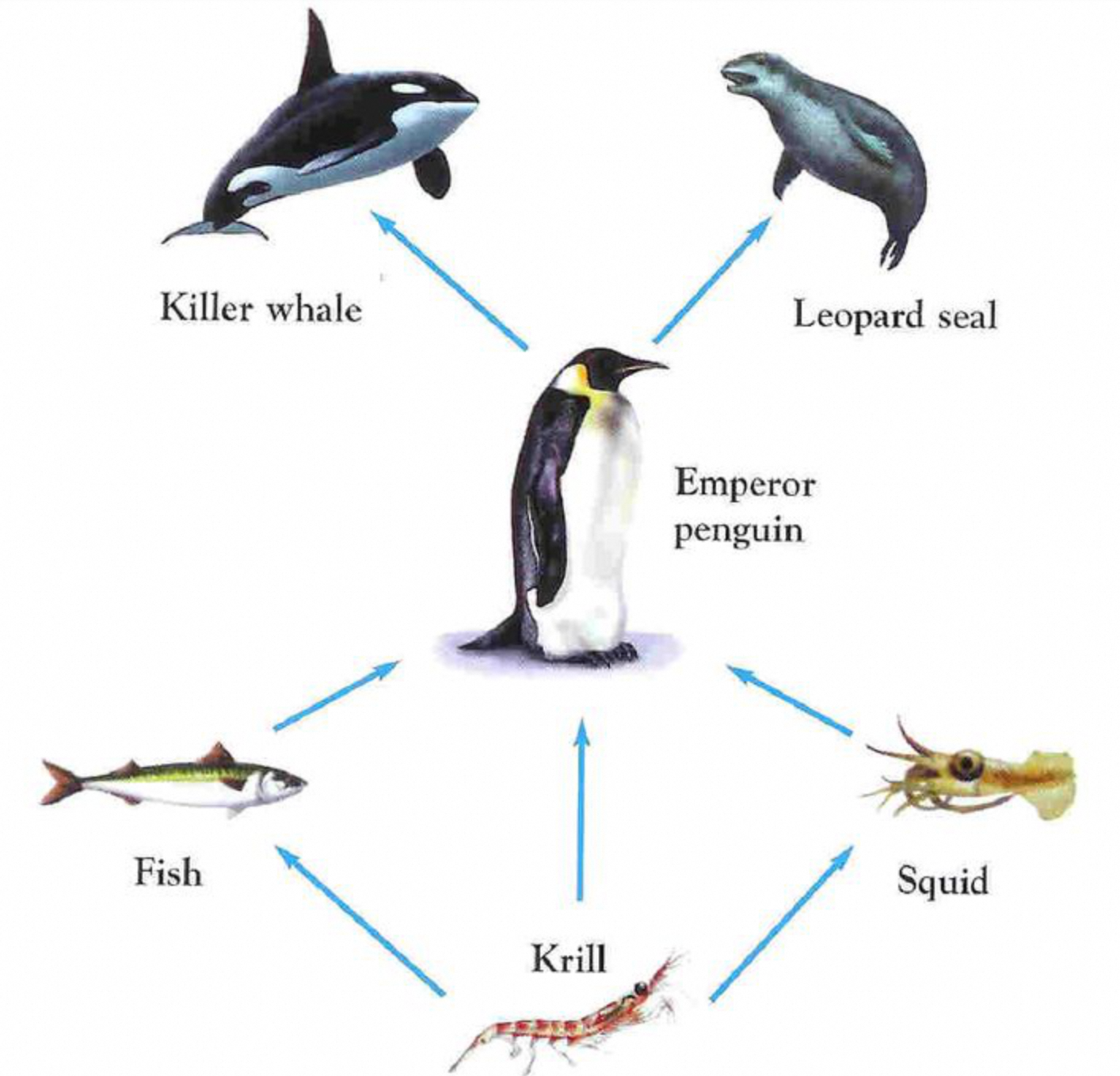
The image depicts a food web involving a killer whale, leopard seal, emperor penguin, fish, squid, krill, and phytoplankton. Arrows indicate the direction of energy flow, starting from phytoplankton at the bottom and progressing to other organisms.
```
- Messages: (Chat messages with DeepSeek-R1)
```json
[
{
"role": "system",
"content": "A conversation between User and Assistant. The user asks a question, and the Assistant solves it. The assistant first thinks about the reasoning process in the mind and then provides the user with the answer. The reasoning process and answer are enclosed within and tags, respectively, i.e., reasoning process here answer here ."
},
{
"role": "user",
"content": "Given the image description below:\nThe image depicts a food web involving a killer whale, leopard seal, emperor penguin, fish, squid, krill, and phytoplankton. Arrows indicate the direction of energy flow, starting from phytoplankton at the bottom and progressing to other organisms., please answer the following question:\n\nFrom the given food web, which is the primary consumer?fish\npenguin\nkrill\nphytoplankton Please answer the question based on the options mentioned before.\n\nPlease reason step by step, and put your final answer (best option) within \\boxed{}. "
},
{
"role": "assistant",
"content": "Okay, let me think through this question. So, the problem is about identifying the primary consumer in a given food web that includes a killer whale, leopard seal, emperor penguin, fish, squid, krill, and phytoplankton. The arrows show the direction of energy flow, starting from phytoplankton at the bottom and moving upwards to the other organisms.\n\nFirst, I need to recall what a primary consumer is. From what I remember, primary consumers are organisms that eat producers. Producers are usually plants or, in aquatic environments, phytoplankton since they can photosynthesize and make their own food. So the primary consumer would be the first level above the producers, right?\n\nLooking at the options provided: fish, penguin, krill, phytoplankton. Phytoplankton is listed here, but I think they are the producers because they are at the bottom of the food web. The arrows start from them, meaning they don't consume other organisms; instead, others consume them. So phytoplankton is out as the primary consumer.\n\nThen, the next step is to see which organism feeds directly on phytoplankton. The options left are fish, penguin, and krill. Let me think. Krill are small crustaceans, right? I think krill are known to feed on phytoplankton. They are a key part of the marine food web. So krill would be the primary consumers here because they eat the producers (phytoplankton).\n\nWait, but what about fish? Do some fish also eat phytoplankton? Maybe, but in many marine food chains, krill are the main primary consumers that transfer energy from phytoplankton to higher levels. Squid and fish might then eat the krill, making them secondary consumers. Then penguins would eat fish or squid, so they'd be tertiary consumers. Leopard seals might eat penguins, and killer whales at the top.\n\nSo in this setup, the primary consumer would be krill. Let me confirm again. The phytoplankton are the producers. The primary consumer eats the producer. Krill eat phytoplankton, so they are primary. Fish might eat krill (so secondary), or maybe some fish eat phytoplankton directly? Hmm. If fish are eating phytoplankton, then they would also be primary consumers. But the question is which one is the primary consumer from the options given. The options are fish, penguin, krill, phytoplankton. So krill is an option. If krill are primary consumers and fish are either primary or secondary depending on their diet. But since the food web includes krill, I think in this case krill is the primary consumer. Because typically, in a simplified food chain, the order would be phytoplankton → krill → fish/squid → penguins → seals → killer whales. So krill would be primary, fish and squid secondary, penguins tertiary, and so on. Therefore, the correct answer is krill.\n\nThe primary consumer in a food web is the organism that directly feeds on producers (like phytoplankton). In the given options, **krill** consume phytoplankton, making them the primary consumers. Fish and squid would typically eat krill (secondary consumers), while penguins and higher predators occupy higher trophic levels. Phytoplankton are producers, not consumers. \n\n**Answer:** \\boxed{krill}"
}
]
```
- Solution:
```text
krill
```
- Correctness:
```text
true
```
- Usage:
```json
{
"completion_tokens":663,
"prompt_tokens":121,
"total_tokens":784
}
```
## 数据结构
| 字段 | 类型 | 描述 | 样例 |
|--------------|--------|--------------------------------------|------------------------------------------------------|
| id | string | 唯一id | "4545efc9-4366-4c84-8869-515643b3dbf7" |
| image | string | 图像相对路径 | "ocr_vqa/images/1629720623.jpg" |
| caption | string | 图像描述,沿用原LLaVA-CoT-100k的图像描述(由GPT4-o生成) | "The image displays a book cover with a red background ..." |
| messages | list | R1 chat messages | 如下文示例 |
| solution | string | 正确答案 | "Sam Beeson" |
| correctness | string | 正确性 | "true" or "false" |
| usage | dict | token消耗 | 如下文示例 |
| judge_method | string | pred_answer和gold_answer的判断/抽取方法 | 默认 "rule" |
| source | string | 数据来源 | 如"coco", "gqa", "geoqa+" |
* `messages`字段示例
```json
[
{
"role": "system",
"content": "A conversation between User and Assistant. The user asks a question, and the Assistant solves it. The assistant first thinks about the reasoning process in the mind and then provides the user with the answer. The reasoning process and answer are enclosed within and tags, respectively, i.e., reasoning process here answer here ."
},
{
"role": "user",
"content": "Given the image description below:\nThe image displays a book cover with a red background. ... \nPlease reason step by step ..."
},
{
"role": "assistant",
"content": "Okay, let's see. The question is asking ...\n\n\\boxed{Sam Beeson}"
}
]
```
* `usage`字段示例
```json
{
"completion_tokens":195,
"prompt_tokens":115,
"total_tokens":310
}
```
## 数据合成
### 原始数据分布
LLaVA-R1-100k数据集包含多个开源数据集的样本,与LLaVA-CoT-100k的数据分布一致,主要分为General VQA和Science-Targeted VQA两大类。
| **Dataset** | **Type** | **Size** |
|---------------------|------------------------|-----------|
| ShareGPT4V | General VQA | 31.3k |
| ChartQA | General VQA | 17.2k |
| A-OKVQA | General VQA | 16.1k |
| AI2D | Science-Targeted VQA | 11.4k |
| GeoQA+ | Science-Targeted VQA | 11.4k |
| ScienceQA | Science-Targeted VQA | 5.6k |
| DocVQA | General VQA | 4.0k |
| PISC | General VQA | 1.0k |
| CLEVR | General VQA | 0.5k |
| CLEVR-Math | Science-Targeted VQA | 0.5k |
### 数据合成流水线
数据合成采用`Perception-Reasoning`流水线,即图像描述生成和自然语言推理来合成数据。具体步骤如下:
1. 使用GPT4-o生成图像描述(这里沿用原有LLaVA-CoT-100k数据集的图像描述内容)
2. 使用DeepSeek-R1生成自然语言推理会话
### 样本详细示例
#### **1. Example-1 source-coco**
```json
{
"id": "779bf20e-4a3e-4a1e-ae8e-e1822d97f10c",
"image": "coco/train2017/000000514605.jpg",
"caption": "The image shows a beach scene with a person holding lines attached to a large kite or parachute-like canopy. The beach is lined with palm trees, and the sky is clear.",
"messages": [
{
"role": "system",
"content": "A conversation between User and Assistant. The user asks a question, and the Assistant solves it. The assistant first thinks about the reasoning process in the mind and then provides the user with the answer. The reasoning process and answer are enclosed within and tags, respectively, i.e., reasoning process here answer here ."
},
{
"role": "user",
"content": "Given the image description below:\nThe image shows a beach scene with a person holding lines attached to a large kite or parachute-like canopy. The beach is lined with palm trees, and the sky is clear., please answer the following question:\n\nWhat sport can be associated with the above picture? \nA. wake boarding \nB. paragliding \nC. surfing \nD. sailing\n\nPlease reason step by step, and put your final answer (best option) within \\boxed{}. "
},
{
"role": "assistant",
"content": "Okay, let me try to figure out this question. So, the image description is a beach scene where a person is holding lines attached to a large kite or parachute-like canopy. The beach has palm trees and a clear sky. The question is asking which sport this picture is associated with, and the options are wake boarding, paragliding, surfing, or sailing.\n\nFirst, I need to break down the elements in the description. The key points here are the person holding lines connected to a kite or parachute-like canopy. That immediately makes me think of activities that involve kites or something similar. Let's look at the options one by one.\n\nOption A is wake boarding. Wakeboarding is a water sport where the rider is towed behind a boat on a board, performing maneuvers. I don't think a kite is involved here; it's more about being pulled by a boat. So maybe not wake boarding.\n\nOption B is paragliding. Paragliding uses a lightweight, free-flying glider. The pilot sits in a harness and is connected by lines to the canopy, which looks like a parachute. They usually launch from hills or cliffs, but maybe on a beach if there's enough wind. The lines and canopy mentioned fit with paragliding. But wait, paragliding is more about gliding through the air, right? The person would be flying, not necessarily on the beach. But the image says the person is holding the lines on the beach. Maybe they're about to take off?\n\nOption C is surfing. Surfing involves riding waves on a board. No kite involved here. Surfers use their hands and body to balance, but not lines attached to a kite. So probably not surfing.\n\nOption D is sailing. Sailing uses wind to propel a boat with sails. Again, not directly involving a kite, unless it's a specific type like windsurfing or kite sailing. Wait, but sailing typically refers to boats. However, there's a sport called kite sailing or kiteboarding, which is similar to windsurfing but uses a kite. But I need to check the options given. The options here are sailing, not kiteboarding. Hmm.\n\nWait, the options given are wake boarding, paragliding, surfing, sailing. So maybe the correct answer is paragliding because of the parachute-like canopy and lines. But wait, paragliding is more of an aerial sport where you glide. If the person is on the beach holding the lines, maybe they are setting up a paraglider to take off from the beach. Alternatively, could it be kiteboarding? But kiteboarding isn't listed here. Kiteboarding uses a kite to pull the rider on a board over water, but the options don't include that. So maybe the answer is paragliding.\n\nAlternatively, sailing—if the canopy is part of a sail. But sailing usually involves a boat with a sail. Unless it's land sailing, which uses a sail on a vehicle on land, but that's not common on a beach with palm trees. So maybe not.\n\nSurfing definitely doesn't fit. Wake boarding is boat-towed. So between B and D. The parachute-like canopy makes me think more of paragliding. The lines attached to a large kite—paragliders have a canopy with lines. So even though paragliding is typically done from heights, maybe in some coastal areas, you can take off from a beach if there's a suitable wind and a dune or cliff. Alternatively, the sport could be kiteboarding, but since that's not an option, paragliding might be the closest. Wait, but paragliding's canopy is more like a wing, while a kite is different. Wait, but the description says \"parachute-like canopy,\" which does align with paragliding. So I think B is the answer.\n\nThe image depicts a person on a beach holding lines connected to a parachute-like canopy, which aligns with **paragliding**. Paragliding involves a lightweight glider (resembling a parachute) controlled via lines, and participants often launch from open areas like beaches. While kiteboarding (not listed) also uses a kite, the parachute-like structure and absence of water-based equipment in the description make **paragliding** the best match among the options provided. \n\n\\boxed{B}"
}
],
"solution": "B",
"correctness": "true",
"usage": {
"completion_tokens": 901,
"prompt_tokens": 103,
"total_tokens": 1004
},
"judge_method": "rule",
"source": "coco"
}
```
#### **2. Example-2 source-goqa+**
```json
{
"id": "814c96df-7892-4d75-a4de-306ee4998016",
"image": "geoqa+/images/9080.png",
"caption": "The image shows a rectangle ABCD with AB as the top side and DC as the bottom side parallel to it. The dimensions of the rectangle are given as AB = 4 and BC = 2. Above the rectangle, point P is placed such that ∠APB is 90°. Lines AP, BP, and DP are drawn, connecting P to each vertex A, B, and D.",
"messages": [
{
"role": "system",
"content": "A conversation between User and Assistant. The user asks a question, and the Assistant solves it. The assistant first thinks about the reasoning process in the mind and then provides the user with the answer. The reasoning process and answer are enclosed within and tags, respectively, i.e., reasoning process here answer here ."
},
{
"role": "user",
"content": "Given the image description below:\nThe image shows a rectangle ABCD with AB as the top side and DC as the bottom side parallel to it. The dimensions of the rectangle are given as AB = 4 and BC = 2. Above the rectangle, point P is placed such that ∠APB is 90°. Lines AP, BP, and DP are drawn, connecting P to each vertex A, B, and D., please answer the following question:\n\nAs shown in the figure, in rectangle ABCD, AB=4, BC=2, and P is the starting point above the rectangle. If ∠APB=90° is satisfied and DP is connected, what is the maximum value of DP? \nA. 2√{2}+2 \nB. 4√{2} \nC. 2√{5} \nD. 4√{2}+2\n\nPlease reason step by step, and put your final answer (best option) within \\boxed{}. "
},
{
"role": "assistant",
"content": "Alright, let's try to tackle this problem step by step. So, we have a rectangle ABCD with AB = 4 and BC = 2. Point P is above the rectangle such that angle APB is 90 degrees, and we need to find the maximum possible length of DP. The options are given, so after working it out, we can check which one matches.\n\nFirst, let's visualize the rectangle. AB is the top side, DC is the bottom side. So, if we consider the rectangle on a coordinate plane, maybe it's easier. Let me assign coordinates to each point. Let's place point A at the origin (0, 0). Then, since AB = 4, point B would be at (4, 0). BC is 2, so moving up 2 units from B, point C is at (4, 2), and point D, completing the rectangle, would be at (0, 2). Wait, but the problem says P is above the rectangle. So the rectangle is from (0,0) to (4,0) to (4,2) to (0,2) back to (0,0). Therefore, above the rectangle would be y > 2.\n\nBut wait, the problem says point P is above the rectangle, so maybe it's just not inside the rectangle. Since the rectangle spans from y=0 to y=2, above would be y > 2. Okay, so P has coordinates (x, y) where y > 2.\n\nNow, angle APB is 90 degrees. So, triangle APB is a right-angled triangle at P. We need to use the property that if angle APB is 90 degrees, then P lies on the circle with AB as the diameter. Wait, that's a standard geometric theorem: the locus of points P such that angle APB is 90 degrees is the circle with AB as diameter, excluding points A and B themselves.\n\nBut since AB is the diameter, the center of this circle would be the midpoint of AB. AB is from (0,0) to (4,0), so the midpoint is (2,0), and the radius is half of AB, which is 2. So the equation of the circle is (x - 2)^2 + y^2 = (2)^2. Wait, but if AB is the diameter, then points A and B lie on the circle. However, since P is above the rectangle, which is y > 2, we need to see where this circle is in relation to that.\n\nWait, if the circle has center at (2,0) and radius 2, then the topmost point of the circle would be at (2,0 + 2) = (2,2). So the circle touches the top side of the rectangle at point (2,2). But P is above the rectangle, so y > 2. But the circle only goes up to y=2. Hmm, that seems contradictory. If angle APB is 90 degrees, then P must lie on the circle with AB as diameter, but that circle only reaches up to y=2, which is the top of the rectangle. But the problem states that P is above the rectangle. Therefore, there must be a mistake in my reasoning.\n\nWait a minute, maybe I confused the direction. Let me double-check. If AB is the diameter, then the circle with AB as diameter is indeed centered at (2,0) with radius 2. The highest point on that circle is (2,2), which is exactly the midpoint of the top side of the rectangle. But since the rectangle's top side is AB from (0,0) to (4,0), wait, hold on, no. Wait, AB is the top side? Wait, the problem says: \"The image shows a rectangle ABCD with AB as the top side and DC as the bottom side parallel to it.\" Wait, that's conflicting with my coordinate assignment. If AB is the top side, then the rectangle is drawn with AB at the top. So in that case, perhaps AB is the top, so A is at (0, 2), B at (4, 2), C at (4, 0), and D at (0, 0). Wait, that makes DC the bottom side, which is parallel to AB. Then BC would be from (4,2) to (4,0), so BC=2. Then AB=4. That makes more sense.\n\nI think I messed up the initial coordinate assignment. Let me correct that. If AB is the top side, then coordinates should be:\n\n- A: (0, 2)\n- B: (4, 2)\n- C: (4, 0)\n- D: (0, 0)\n\nSo AB is the top side with length 4, BC is the right side with length 2. Therefore, the rectangle spans from y=0 (bottom) to y=2 (top). Then point P is above the rectangle, so y > 2.\n\nOkay, that makes more sense. So angle APB is 90 degrees, and we need to find the maximum DP, where D is (0,0). So DP is the distance from P to (0,0). So we need to maximize the distance from P to D, given that P lies on the circle with AB as diameter (since angle APB is 90°), and P is above the rectangle (y > 2).\n\nSo let's redo the circle. If AB is from (0,2) to (4,2), then the midpoint of AB is at (2,2), and the radius is 2. Therefore, the equation of the circle is (x - 2)^2 + (y - 2)^2 = 2^2 = 4.\n\nBut since P is above the rectangle, which is y > 2, then P is on the upper half of this circle. Wait, the circle is centered at (2,2) with radius 2. So the circle will extend from y=0 to y=4. So the topmost point of the circle is at (2,4). Therefore, the upper half of the circle is from y=2 to y=4.\n\nTherefore, point P is somewhere on the upper half of the circle (x - 2)^2 + (y - 2)^2 = 4, with y > 2. So parametrizing this circle, we can use coordinates (2 + 2 cos θ, 2 + 2 sin θ), where θ ranges from 0 to π (upper half). So θ = 0 would be (4,2), θ = π/2 would be (2,4), θ = π would be (0,2). But since P is above the rectangle (which is up to y=2), but the circle's upper half is from y=2 to y=4. However, points on the circle at y=2 are points on the top side AB of the rectangle, which are excluded since P is above the rectangle. So θ must be from 0 < θ < π, but actually y=2 + 2 sin θ, so to have y > 2, sin θ > 0, which is θ in (0, π). So P can be anywhere on the upper half except the endpoints.\n\nNow, we need to find the maximum distance from P to D, where D is (0,0). So DP is the distance from (x, y) to (0,0), which is sqrt(x^2 + y^2). Since we need to maximize this, we can equivalently maximize x^2 + y^2.\n\nGiven that (x - 2)^2 + (y - 2)^2 = 4, let's expand this equation:\n\n(x^2 - 4x + 4) + (y^2 - 4y + 4) = 4\n\nx^2 + y^2 - 4x - 4y + 8 = 4\n\nx^2 + y^2 = 4x + 4y - 4\n\nSo we can substitute x^2 + y^2 with 4x + 4y - 4. Therefore, DP^2 = 4x + 4y - 4. To maximize DP, we need to maximize 4x + 4y - 4, which is equivalent to maximizing x + y.\n\nSo the problem reduces to maximizing x + y subject to (x - 2)^2 + (y - 2)^2 = 4 and y ≥ 2. Wait, but since P is above the rectangle, y > 2, but on the circle, y can be up to 4.\n\nBut regardless, to maximize x + y on the circle (x - 2)^2 + (y - 2)^2 = 4. This is a standard optimization problem. The maximum of x + y on a circle can be found using the method of Lagrange multipliers or by parametrization.\n\nAlternatively, since the expression x + y is linear, its maximum on the circle will occur at the point where the line x + y = k is tangent to the circle. The maximum k is achieved when the line is tangent to the circle at the point farthest in the direction of the vector (1,1).\n\nAlternatively, parametrize the circle as x = 2 + 2 cos θ, y = 2 + 2 sin θ. Then x + y = 4 + 2 cos θ + 2 sin θ. The maximum of this expression is 4 + 2√(cos^2 θ + sin^2 θ + 2 sin θ cos θ)? Wait, no. Wait, cos θ + sin θ can be written as sqrt(2) sin(θ + 45°), so the maximum of cos θ + sin θ is sqrt(2), so the maximum of x + y would be 4 + 2*sqrt(2). Therefore, DP^2 = 4x + 4y - 4 = 4(x + y) - 4. If x + y is maximum at 4 + 2*sqrt(2), then DP^2 = 4*(4 + 2*sqrt(2)) - 4 = 16 + 8*sqrt(2) - 4 = 12 + 8*sqrt(2). Then DP would be sqrt(12 + 8*sqrt(2)).\n\nWait, let me check this again. Let's do it step by step.\n\nIf x = 2 + 2 cos θ, y = 2 + 2 sin θ, then x + y = 4 + 2 cos θ + 2 sin θ. So x + y = 4 + 2(cos θ + sin θ). The maximum of cos θ + sin θ is sqrt(2), achieved when θ = 45° or π/4. Therefore, the maximum x + y is 4 + 2*sqrt(2). Therefore, substituting back into DP^2 = 4(x + y) - 4 = 4*(4 + 2*sqrt(2)) - 4 = 16 + 8*sqrt(2) - 4 = 12 + 8*sqrt(2). Therefore, DP = sqrt(12 + 8*sqrt(2)).\n\nHmm, but let's see if we can simplify sqrt(12 + 8*sqrt(2)). Let me compute 12 + 8√2. Let's see if this can be expressed as (a + b√2)^2. Let's expand that:\n\n(a + b√2)^2 = a^2 + 2ab√2 + 2b^2.\n\nWe need this equal to 12 + 8√2. Therefore:\n\na^2 + 2b^2 = 12\n\n2ab = 8 => ab = 4\n\nSo, solving for a and b. Let me solve ab = 4, so a = 4/b. Substitute into the first equation:\n\n(4/b)^2 + 2b^2 = 12\n\n16/b^2 + 2b^2 = 12\n\nMultiply both sides by b^2:\n\n16 + 2b^4 = 12b^2\n\n2b^4 -12b^2 +16 =0\n\nDivide by 2:\n\nb^4 -6b^2 +8=0\n\nLet z = b^2:\n\nz^2 -6z +8=0\n\nSolutions:\n\nz=(6±sqrt(36-32))/2=(6±2)/2=4 or 2.\n\nTherefore, z=4 => b^2=4 => b=2 or -2\n\nz=2 => b^2=2 => b=√2 or -√2\n\nSo possible b values:\n\nIf b=2, then a=4/2=2\n\nCheck a^2 + 2b^2 = 4 + 8=12, which works.\n\nIf b=√2, then a=4/√2=2√2\n\nThen a^2 +2b^2= (8) + 2*(2)=8 +4=12, which also works.\n\nTherefore, sqrt(12 +8√2) can be expressed as either 2 + 2√2 or 2√2 + ... wait, wait:\n\nWait, let's check (2 + 2√2)^2= 4 + 8√2 + 8=12 +8√2. Yes! So sqrt(12 +8√2)=2 + 2√2. Wait, but 2 + 2√2 squared is 4 + 8 + 8√2=12 +8√2. Perfect! Therefore, DP=2 + 2√2. Looking at the options, A is 2√2 +2, which is the same as 2 + 2√2. So answer A.\n\nWait, but hold on. Wait, the options are:\n\nA. 2√2 +2\n\nB. 4√2\n\nC. 2√5\n\nD. 4√2 +2\n\nSo A is 2√2 +2, which is the same as our result. However, let me verify again because sometimes these problems can have tricks.\n\nWait, DP is the distance from (0,0) to (x,y), which we parametrized as (2 + 2 cos θ, 2 + 2 sin θ). Wait, but in our coordinate system, point D is (0,0), right? Because AB is the top side at y=2, so D is (0,0). So DP is distance from (0,0) to (2 + 2 cos θ, 2 + 2 sin θ). So DP squared is (2 + 2 cos θ)^2 + (2 + 2 sin θ)^2.\n\nLet's compute that:\n\n= (4 + 8 cos θ + 4 cos²θ) + (4 + 8 sin θ + 4 sin²θ)\n\n= 8 + 8 cos θ + 8 sin θ + 4 (cos²θ + sin²θ)\n\n= 8 + 8 (cos θ + sin θ) + 4(1)\n\n= 12 + 8 (cos θ + sin θ)\n\nWhich matches the earlier result. So DP^2 =12 +8 (cos θ + sin θ). The maximum value of cos θ + sin θ is sqrt(2), so DP^2=12 +8*sqrt(2). Then DP=sqrt(12 +8*sqrt(2))=2 +2*sqrt(2). Therefore, the answer is A.\n\nBut wait, the options include 2√5 as option C. Let me check if I did everything correctly.\n\nAlternatively, maybe there's another approach. Let me consider coordinates again. Since P lies on the circle (x -2)^2 + (y -2)^2 =4, and we need to maximize sqrt(x^2 + y^2). Alternatively, we can use geometry: the point on the circle farthest from the origin (0,0). The center of the circle is at (2,2), radius 2. The distance from the origin to the center is sqrt(2^2 +2^2)=sqrt(8)=2√2. Therefore, the farthest point from the origin on the circle would be along the line connecting the origin to the center, extended outward by the radius. So the maximum distance is 2√2 + 2. So that would be answer A.\n\nYes, that's a much quicker way. The maximum distance from a point to a circle is the distance from the point to the center plus the radius. Here, the center is at (2,2), radius 2. The distance from (0,0) to (2,2) is sqrt(8) = 2√2, so the maximum DP is 2√2 + 2, which is option A.\n\nTherefore, the answer should be A.\n\nBut wait, let me confirm this with the earlier parametrization. If the farthest point is along the line from the origin through the center, then that direction is (2,2) from the origin. So the unit vector in that direction is (2,2)/sqrt(8) = (1/√2, 1/√2). So moving from the center (2,2) in that direction by the radius 2, the point would be (2,2) + 2*(1/√2,1/√2) = (2 + 2/√2, 2 + 2/√2) = (2 + √2, 2 + √2). Then the distance from (0,0) to this point is sqrt( (2 + √2)^2 + (2 + √2)^2 ) = sqrt(2*(2 + √2)^2 ) = sqrt(2)*(2 + √2) = 2*sqrt(2) + 2, which is the same as option A. So this confirms it.\n\nAlternatively, let me check if the point (2 + √2, 2 + √2) lies on the circle:\n\n(x -2)^2 + (y -2)^2 = (√2)^2 + (√2)^2 = 2 + 2 =4. Yes, so it does lie on the circle. Therefore, this is the farthest point.\n\nTherefore, the maximum DP is 2√2 + 2, which is option A.\n\nBut wait, the answer options are:\n\nA. 2√2 +2\n\nB. 4√2\n\nC. 2√5\n\nD. 4√2 +2\n\nSo according to this, A is the answer. However, the original problem says \"DP is connected,\" but I think that's just describing the figure, not affecting the calculation. So I think the answer is A.\n\nWait, but let me double-check. Because sometimes in these problems, there might be another point where DP is maximized not along the line to the center, but in another quadrant. Wait, but since the circle is centered at (2,2), and we are looking for the farthest point from (0,0), which is in the opposite direction. So the farthest point should be in the direction of the center from the origin. So as we calculated, (2 + √2, 2 + √2). So that's correct.\n\nAlternatively, if we use Lagrange multipliers to maximize f(x,y)=x^2 + y^2 subject to g(x,y)=(x -2)^2 + (y -2)^2 -4=0.\n\nThe gradients:\n\n∇f = (2x, 2y)\n\n∇g = (2(x -2), 2(y -2))\n\nSetting ∇f = λ∇g:\n\n2x = λ*2(x -2)\n\n2y = λ*2(y -2)\n\nWhich simplifies to:\n\nx = λ(x -2)\n\ny = λ(y -2)\n\nSolving for λ:\n\nFrom first equation: λ = x / (x -2)\n\nFrom second equation: λ = y / (y -2)\n\nTherefore, x/(x -2) = y/(y -2)\n\nCross-multiplying: x(y -2) = y(x -2)\n\nxy -2x = xy -2y\n\nSimplify: -2x = -2y => x = y\n\nTherefore, x = y. Substitute back into the constraint:\n\n(x -2)^2 + (x -2)^2 =4\n\n2(x -2)^2 =4\n\n(x -2)^2=2\n\nx -2=±√2\n\nx=2±√2\n\nBut since P is above the rectangle, y >2. Since x = y, so x = y >2, so we take the positive sqrt:\n\nx=2 +√2, y=2 +√2\n\nTherefore, the point is (2 +√2, 2 +√2), which gives DP= sqrt( (2 +√2)^2 + (2 +√2)^2 )=sqrt(2*(2 +√2)^2 )=sqrt(2)*(2 +√2)=2√2 +2. So same result. Therefore, answer is A.\n\nBut wait, let me check option C: 2√5. How long is that? sqrt(20)≈4.472. Our result is 2√2 +2≈2*1.414 +2≈2.828 +2≈4.828, which is larger. So if someone thought the maximum is achieved at (4,4), but (4,4) is not on the circle. Wait, distance from (4,4) to center (2,2) is sqrt( (2)^2 + (2)^2 )=sqrt(8)=2√2, which is equal to the radius. Wait, but the radius is 2, not 2√2. So (4,4) is outside the circle. Therefore, the farthest point is indeed 2√2 +2, which is approximately 4.828. The options given have 4√2≈5.656 as option B and 4√2 +2≈7.656 as D. So our answer A is approximately 4.828, which is reasonable.\n\nTherefore, I think the correct answer is A.\n\n**Final Answer**\n\\boxed{A}\n\nGiven a rectangle ABCD with AB = 4, BC = 2, and point P above the rectangle such that ∠APB = 90°, we need to find the maximum value of DP.\n\n1. **Coordinate Assignment**:\n - Place the rectangle in a coordinate system with A(0, 2), B(4, 2), C(4, 0), and D(0, 0).\n - Point P lies above the rectangle, so y > 2.\n\n2. **Circle with AB as Diameter**:\n - Since ∠APB = 90°, point P lies on the circle with AB as the diameter.\n - The circle is centered at (2, 2) with radius 2. The equation is \\((x - 2)^2 + (y - 2)^2 = 4\\).\n\n3. **Maximizing DP**:\n - DP is the distance from P(x, y) to D(0, 0), which is \\(\\sqrt{x^2 + y^2}\\).\n - To maximize DP, we need to maximize \\(x^2 + y^2\\).\n\n4. **Parametrization and Optimization**:\n - Parametrize the circle: \\(x = 2 + 2\\cos\\theta\\), \\(y = 2 + 2\\sin\\theta\\).\n - Express \\(x + y\\) and find its maximum value. The maximum value of \\(\\cos\\theta + \\sin\\theta\\) is \\(\\sqrt{2}\\), leading to \\(x + y = 4 + 2\\sqrt{2}\\).\n\n5. **Distance Calculation**:\n - Substitute \\(x + y = 4 + 2\\sqrt{2}\\) into the expression for DP.\n - \\(DP^2 = 4(x + y) - 4 = 4(4 + 2\\sqrt{2}) - 4 = 12 + 8\\sqrt{2}\\).\n - Simplify \\(\\sqrt{12 + 8\\sqrt{2}} = 2 + 2\\sqrt{2}\\).\n\n6. **Verification**:\n - The farthest point on the circle from D(0, 0) is along the line from D through the center (2, 2), extending by the radius, confirming the result.\n\nThus, the maximum value of DP is \\(2\\sqrt{2} + 2\\), corresponding to option A.\n\n\\[\n\\boxed{A}\n\\]"
}
],
"solution": "A. 2√{2}+2",
"correctness": "true",
"usage": {
"completion_tokens": 5228,
"prompt_tokens": 205,
"total_tokens": 5433
},
"judge_method": "rule",
"source": "geoqa+"
}
```
#### **3. Example-3 source-ai2d**
```json
{
"id": "069d2b78-740c-4e08-be43-b039db58a648",
"image": "ai2d/images/1914.png",
"caption": "The image is a food web diagram depicting various animals and plants linked by arrows. It includes organisms such as hawk, rabbit, field mouse, grass, great horned owl, sparrow, shrew, skunk, grasshopper, and blueberry bush. Arrows indicate the direction of consumption, showing who eats whom.",
"messages": [
{
"role": "system",
"content": "A conversation between User and Assistant. The user asks a question, and the Assistant solves it. The assistant first thinks about the reasoning process in the mind and then provides the user with the answer. The reasoning process and answer are enclosed within and tags, respectively, i.e., reasoning process here answer here ."
},
{
"role": "user",
"content": "Given the image description below:\nThe image is a food web diagram depicting various animals and plants linked by arrows. It includes organisms such as hawk, rabbit, field mouse, grass, great horned owl, sparrow, shrew, skunk, grasshopper, and blueberry bush. Arrows indicate the direction of consumption, showing who eats whom., please answer the following question:\n\nIn the diagram of the food web shown, what do shrews consume out of these answers?grasshopper\nfield mouse\nrabbit\ngrass Please answer the question based on the options mentioned before.\n\nPlease reason step by step, and put your final answer (best option) within \\boxed{}. "
},
{
"role": "assistant",
"content": "Okay, let me try to figure out what shrews consume based on the given food web description. So, the image has a bunch of organisms connected by arrows showing who eats whom. The options provided are grasshopper, field mouse, rabbit, and grass. I need to determine which of these the shrew eats.\n\nFirst, I should recall what shrews typically eat. From what I remember, shrews are small insectivorous mammals. They primarily eat insects, worms, and other small invertebrates. But maybe in this specific food web, their diet is a bit different based on the listed organisms.\n\nLooking at the options, grasshopper is an insect, which fits the shrew's usual diet. Field mice are rodents, and while shrews might sometimes eat small vertebrates, I'm not sure if they would prey on a field mouse. Rabbits are much larger than shrews, so I don't think a shrew would eat a rabbit. Grass is a plant, and shrews are carnivorous, so they wouldn't eat grass.\n\nNow, checking the organisms listed in the food web: hawk, rabbit, field mouse, grass, great horned owl, sparrow, shrew, skunk, grasshopper, and blueberry bush. The arrows show the direction of consumption. So, in the diagram, if the shrew has an arrow pointing from the shrew to another organism, that means the shrew is consuming it. Alternatively, if another organism's arrow points to the shrew, that would mean the shrew is being consumed. But the question is about what the shrew consumes, so we need to see what the shrew's arrows are pointing towards.\n\nSince the actual image isn't here, I have to rely on typical food web structures. Shrews are usually secondary consumers. They might eat grasshoppers (which are primary consumers eating plants like grass). Field mice are also primary or secondary consumers, maybe eating grass or insects. If the food web shows the shrew eating the grasshopper, that would make sense. Alternatively, maybe the shrew and field mouse are both eating grasshoppers, but I don't know if shrews eat field mice. Skunks might eat shrews, but again, not sure.\n\nGiven the options, the most likely answer is grasshopper. Grass is eaten by primary consumers like rabbits and field mice. Shrews are higher up, so they would eat the herbivores like grasshoppers. Unless in this specific web, there's a different connection. But since I can't see the diagram, I have to go with typical relationships. So the answer should be grasshopper.\n\nThe shrews in the food web likely consume **grasshoppers**. Shrews are insectivorous and typically prey on small invertebrates like insects. Among the options provided, grasshoppers fit this dietary pattern. Field mice and rabbits are vertebrates larger than shrews, making them unlikely prey. Grass is a plant, which shrews (as carnivores) do not consume. \n\n**Answer:** \\boxed{grasshopper}"
}
],
"solution": "grasshopper",
"correctness": "true",
"usage": {
"completion_tokens": 613,
"prompt_tokens": 141,
"total_tokens": 754
},
"judge_method": "rule",
"source": "ai2d"
}
```
#### **4. Example-4 source-gqa**
```json
{
"id": "aa043d3c-17f1-47d3-9c5c-c439e2403416",
"image": "gqa/images/2384090.jpg",
"caption": "The image shows various discarded appliances lined up on a sidewalk. They appear to be refrigerators or similar large appliances. On the far right, there is a white appliance.",
"messages": [
{
"role": "system",
"content": "A conversation between User and Assistant. The user asks a question, and the Assistant solves it. The assistant first thinks about the reasoning process in the mind and then provides the user with the answer. The reasoning process and answer are enclosed within and tags, respectively, i.e., reasoning process here answer here ."
},
{
"role": "user",
"content": "Given the image description below:\nThe image shows various discarded appliances lined up on a sidewalk. They appear to be refrigerators or similar large appliances. On the far right, there is a white appliance., please answer the following question:\n\nWhat is the color of the appliance that is on the right?\nAnswer the question using a single word or phrase.\n\nPlease reason step by step, and put your final answer (best option) within \\boxed{}. "
},
{
"role": "assistant",
"content": "Okay, let's see. The user provided an image description where various discarded appliances are lined up on a sidewalk. They mention that the appliances appear to be refrigerators or similar large ones. Then, specifically, on the far right, there's a white appliance.\n\nThe question is asking for the color of the appliance on the right. The answer should be a single word or phrase. So, looking at the description, the key detail here is \"on the far right, there is a white appliance.\" That part directly states the color. I need to make sure there's no ambiguity. The description doesn't mention any other colors for the appliances on the right, just that one is white. So the answer should be white. Let me double-check if there's any mention of other appliances on the right having different colors, but the description only specifies the white one there. Yep, so the answer is white.\n\n\\boxed{white}"
}
],
"solution": "White",
"correctness": "true",
"usage": {
"completion_tokens": 195,
"prompt_tokens": 94,
"total_tokens": 289
},
"judge_method": "rule",
"source": "gqa"
}
```
## 使用方式
LLaVA-R1-100k 包含两部分数据:**图像数据**和**标签数据**。
其中,标签数据以jsonl文件存储,包含98422条**使用GPT4-o得到的图像描述**,和**使用DeepSeek-R1(满血版)得到的带有思考过程的Reasoning标注数据**, 总大小760+MB。
图像数据放在压缩文件images.zip中,数量:80012,大小:10.3+GB
### 1. 使用modelscope command line下载
```shell
modelscope download ModelScope/LLaVA-R1-100k --repo-type dataset --local_dir /path/to/your_dir
```
* 备注:
* images.zip文件下载到`/path/to/your_dir`以后,解压得到`images`文件夹,则路径为`/path/to/your_dir/images`。
* jsonl文件中的`image`字段是图像的相对路径,使用时需要结合上一步得到的`/path/to/your_dir/images`拼接成完整路径。
### 2. 使用Git下载
:modelscope-code[]{type="git"}
## 后续计划
1. 在此数据集基础上,我们将探索多模态GRPO训练在不同类型和复杂度的任务、不同模型上的表现(进行中)
2. 对比多模态GRPO训练和SFT的性能、效率等指标(进行中)
3. 使用该数据集进行Qwen2.5-VL等多模态模型蒸馏,目标是在多模态复杂Reasoning/Planning/Understanding任务上达到同尺寸模型性能最佳
4. 开源代码,包括数据合成、模型训练、评估等
5. 后续版本将提供model-based方式来提升答案校验的召回率和准确率。
## 引用
```text
@misc {ModelScope_Team_2025,
author = { {The ModelScope Team} },
title = { LLaVA-R1-100k },
year = 2025,
url = { https://modelscope.cn/datasets/modelscope/LLaVA-R1-100k },
publisher = { ModelScope }
}
```